Sunday, January 4, 2009


Thursday, January 1, 2009
Wednesday, December 31, 2008
Tom Hayden Comments reported in Huffington Post
Leaders of presidential transition teams are expected to be discreet, tight-lipped, button-down, servants of power, but not quite so in the case of John Podesta. The senior member of the team setting up the new administration, Podesta also heads a progressive think tank and has authored his own book on progressive politics, which includes a draft inaugural speech.
Podesta's 2008 book The Power of Progress will be scanned by pundits seeking clues to the new administration's thinking, but that could be a false trail. Podesta has expressed specific views distinctly different from Obama's, especially on Iraq, where he has long favored a one-year pullout of all American troops. The value of Podesta's book is as a guide to where a progressive master of politics -- Podesta was chief of staff under Bill Clinton -- wants to see American policies evolve in the future.
Podesta is more than a technician of power. It should be of interest on the Left and Right that he grounds himself in the tradition of social movements, many of them radical in their time, which produced the Progressive Era, the New Deal and the civil rights revolution. He is well-read in these histories, and is a direct Chicago descendant of the white immigrant [Italian] working class that benefited so greatly from labor and social legislation. In addition, he has an intense awareness of the racist legacies that left so many blacks and Latinos excluded from the gains of those eras, "an important lesson that should chasten progressives to this day," he writes. It was during the populist and progressive eras, for example, that African-Americans were massively disenfranchised in the South, while white women were on the path to suffrage.
Published even before the recent Wall Street collapse, Podesta was asserting that "the circumstances we face today demand a new Progressive Era." As a theoretical matter, Podesta distinguishes progressivism from liberalism "though they are 'part of a common project.'" Podesta defines liberalism classically, as a doctrine focusing on the defense of individual rights and liberty against the state. Progressivism, on the other hand, is "tied directly to the search for social and economic justice at the turn of the twentieth century." He cites four other key distinctions:
- Progressivism is more grounded in the religious ethics of social justice, where liberalism derives from the Founding Fathers' preoccupation with avoiding the religious wars of Europe. Podesta has been a major proponent of Democrats incorporating religious values in their social rhetoric.
- Progressivism arose from social movements starting at local and state levels, the "laboratories of reform" as Brandeis described them, whereas modern liberalism has been about federal government action. Progressivism "has a rich non-governmental tradition based in the settlement movement and other community-based efforts to improve living conditions for the poor." For Podesta, the New Deal was the federal culmination of decades of activism from below.
- Progressivism has been an independent, often nonpartisan, reform movement keeping "politicians on both sides of the aisle honest and committed to principled actions on behalf of regular Americans." While the progressive tradition included third party candidates, liberalism is more closely tied to the Democratic Party and Democratic presidencies.
- Progressivism is "more focused on correcting the excesses of individualism in the economy and government" while liberalism is about defending individualism and self-interest.
Podesta's list of the early Progressive accomplishments is formidable: "direct primaries, direct election of senators; the initiative, referendum and recall; health and safety standards in the workplace; taxing authority over interstate commerce; prohibition of child labor; living wage; federal eight-hour day and six-day week; ban on convict labor; workers' compensation; unemployment and old-age insurance; expanded public education; investment in industrial research and development; tariff revision; conservation and waterways protection; women's suffrage; lobbyist reform; restrictions on labor injunctions; investment in roads and national highways; a graduated income tax and inheritance tax; fair treatment of immigrants; and federal oversight over investment and stock sales."
Some of the achievements he lists are exaggerated [the living wage], but in general he imagines a new flurry of reform legislation having an impact for decades into the future. How this boldness fits with President Obama's careful centrism remains to be seen. But having such progressive ambition so close to the Oval Office can only an activist agenda comparable to that just a century before.
Where Podesta should be seriously engaged is on the historic ambiguity of progressivism towards the issues of war and empire. He separates himself from "the outright imperialists" such as Teddy Roosevelt and Herbert Croly, while identifying more closely with the instincts of Robert LaFollette and Jane Addams. Progressives including Clarence Darrow, Upton Sinclair, even W.E.B. Dubois, supported World War I, while most Socialists and other Progressives were opposed. The schism among those early progressives, he says, was rooted in differences over the earlier imperial takeovers of the Philippines, Cuba, Puerto Rico, and Guam . As a corollary, this rising imperialism, radicals and immigrant activists suffered grievous repression, which Podesta compares to our domestic spying during Vietnam and the secret roundups and renditions under the Patriot Act.
Podesta's sympathies led to his first personal political engagement, with the Eugene McCarthy campaign in 1968, a classic replay of Progressive Era politics. Given all this, it is unfortunate that he supported the 2002 US military invasion of Afghanistan and its continuation under Obama. Podesta's level of support is muted rather than warlike, however, limited only to his statement that America must "resuscitate the international resolve to stabilize Afghanistan as increased Taliban activity threatens political gains in the region."
The Center for American Progress website is filled with charts and information deploring the militarization of US policy in Afghanistan while social, economic and diplomatic options are neglected. It is to be hoped, therefore, that Podesta and CAP will play important roles in persuading and pressuring the new Administration to turn away from the perils of another military quagmire, costing tens of billions of dollars, sending American death rates towards the one thousand level, destroying thousands of innocent lives, mobilizing a wider swath of the Muslim world against the US, and squandering Obama's global bank of good will.
It is difficult to argue that 15-20,000 more American combat troops, unknown numbers of special forces and Predator teams, will pacify Afghanistan and Pakistan's tribal areas, resulting in the elimination of Bin Ladin and therefore any further 9/11 threats against the US, but that is the hawks' argument. Podesta doesn't echo their case. Instead, the CAP website carries an op-ed piece by Lawrence Korb and Laura Conley recommending negotiations with Iran over stability in Afghanistan, a sensible option for Obama. The CAP website notes that the US spends $36 billion annually on military efforts in Afghanistan compared with $10.4 billion in development aid [pledged] and only five billion already dispersed since 2002. Even if these priorities were reversed, the shift would include a substantial escalation of casualties inflicted on the insurgents, the civilian population, and tens of thousands of detainees now held, often without charges, in violation of Geneva standards. Since the resistance is embedded among nationalist Pashtun tribes on both sides of the border, the prospects of war spreading into Pakistan increase by the day.
In other words, by endorsing a larger occupation of Afghanistan, even in the context of renewed diplomacy, Podesta could be encouraging a slippery slope into quagmire, or even a creeping escalation that will compete with Obama's more urgent domestic agenda.
Instead of repeating Woodrow Wilson's [and George Bush'] call to make the world safe for democracy, so alluring to certain progressives today, Podesta might consider that foreign policy begins at home, in a reform movement to make our democracy safe for the world.
Podesta's progressivism also is shadowed by his support of NAFTA and other pro-corporate Clinton trade deals in the Nineties. All Podesta writes in this new book is that "NAFTA isn't perfect", and, fortunately, that it is "clear that labor and environmental standards cannot be left to side agreements and need to be part of a core agreement -- as Clinton himself argued near the end of his administration." Podesta is less willing to offer full-throated support to the social movements and democratic elections in Latin America that have effectively derailed the Clinton trade agenda. A revision of NAFTA, CAFTA and the WTO protocols will be more likely to occur under Obama if Podesta and CAP are stronger advocates. One of the Podesta book's best proposals, though undeveloped, is to strengthen the labor ["decent work"] standards of the International Labor Organization, which remain weak and unenforceable many decades after their adoption. If the Progressives could finally adopt a minimum wage as a floor domestically, why can't the Obama administration propose an enforceable living wage on a global scale to offset the notorious "race to the bottom" promoted by free-market absolutism?
Podesta's challenge is to both a consummate insider, the main architect of the transition, while at the same time building the Center for American Progess as an independent center of research, advocacy, and presumably, pressure on the new administration where needed. CAP certainly is more than an administration-in-waiting; its position on Iraq is proof enough of that. But it is less than an independent voice for social movements or greenhouse for the maturing of radical ideas. Podesta is in the thick of struggles at the center of power while at the same time believing that only new ideas, new gadflies, and new movements will renew the Progressive promise. Running a presidential transition is one thing; a transition to a new Progressive Era is harder.
He proposes three central policy missions as the heart of an Obama's agenda:
- a transformation of energy policy to combat climate change, create green jobs, and build a new economy based primarily on renewable resources; his goal is 25 percent of America's fuels from renewables and an 80 percent cut of greenhouse gases by 2050. He is lukewarm at best on nuclear power and "clean" coal;
- an economic recovery plan that stabilizes the economy but with much tougher regulatory standards, a national health care program and new energy priorities; the CAP website currently advocates a $350 billion stimulus, well behind Obama's current thinking. Besides a welcome emphasis on green jobs and expanded higher education, there is little detail about re-regulating Wall Street or placing effective public-interest conditions on bailouts.
- a shift in foreign policy away from the indiscriminate neo-conservative "war on terrorism" model towards one which, while leaving a role for limited military intervention, rests more on aggressive diplomacy and humanitarian assistance. Podesta, however, does not recommend cuts in overall military spending, but instead attacks the Pentagon's $1.6 trillion spending spree on weapons who mission was to counter the Soviet Union. A CAP proposal for meaningful reductions in the military budget does not appear to be forthcoming, even though Rep. Barney Frank, among others, has called for a 25 percent cut.
That these formulations sound safely mainstream, however, is a measure of how rapidly a new American consensus in favor of positive government protecting the public interest has formed as a result of the November presidential election, the humiliating debacles of Iraq, Wall Street and the experience of neo-conservative domination.
But the very culture of Washington is hostile to the whole idea of reform except as a crawl at the margins, or, as Podesta writes in self-criticism, the Beltway is a trap for "slow-motion" thinking. It is even unclear whether the military and corporate elites, some of whom already appointed to the new administration, accept the will of the voters in the recent election. The Pentagon chieftains have an impossible time imagining a withdrawal from Iraq, for example, and will lobby against it. The Obama transition person vetting Pentagon employees, Michelle Flournoy, leads a think tank which has advocated a five-year withdrawal plan, for example.
Similarly, the bankers and corporation rich cannot easily imagine a redistribution of wealth and power, much less change "from the bottom up.' These are people who see community organizing, at best, as a useful rung in climbing the ladder.
In their mindset, the growth of profits is the engine of the economic development. According to Business Week, two-thirds of the Fortune 500 businessmen did not vote for Obama, and the sight of them lobbying Obama to save them from capitalism is, well, grotesque. Podesta is a Keynesian, of course, but it remains to be seen if the excesses of deregulation promoted during the Clinton years will be eliminated in 2009.
In this Beltway atmosphere, CAP already is seen as a "left-wing" hothouse, not as a center of intelligent moderation in relation to the angry mood of most Democratic and independent voters. Yet CAP might have to shift in a more progressive direction to match the desire for real reform among voters justifiably furious over the Wall Street bailouts and failures to withdraw all troops from Iraq. It will take all of Podesta's diplomatic and political skill to bring the administration with him. Whether he can navigate the currents, or will become marooned in a centrist tidepool, will have huge consequences for the period ahead.
But it is comforting at least to know that a serious student of working class, black, women's and immigrant social movements sits in the center of things in Washington, calling for a new Progressive Era to begin. Surely, Podesta is prepared like few in Washington for the opportunity that lies before him. Instead of just reading about and admiring the Progressive role models he so admires, he now has the opportunity of a lifetime to live like one of them. He has come through a long political life since 1968, thankfully still in possession of his maverick instincts.
Tom Hayden is the author of The Tom Hayden Reader [City Lights, 2008] and the forthcoming The Long Sixties [Paradigm, 2009]
Podesta's 2008 book The Power of Progress will be scanned by pundits seeking clues to the new administration's thinking, but that could be a false trail. Podesta has expressed specific views distinctly different from Obama's, especially on Iraq, where he has long favored a one-year pullout of all American troops. The value of Podesta's book is as a guide to where a progressive master of politics -- Podesta was chief of staff under Bill Clinton -- wants to see American policies evolve in the future.
Podesta is more than a technician of power. It should be of interest on the Left and Right that he grounds himself in the tradition of social movements, many of them radical in their time, which produced the Progressive Era, the New Deal and the civil rights revolution. He is well-read in these histories, and is a direct Chicago descendant of the white immigrant [Italian] working class that benefited so greatly from labor and social legislation. In addition, he has an intense awareness of the racist legacies that left so many blacks and Latinos excluded from the gains of those eras, "an important lesson that should chasten progressives to this day," he writes. It was during the populist and progressive eras, for example, that African-Americans were massively disenfranchised in the South, while white women were on the path to suffrage.
Published even before the recent Wall Street collapse, Podesta was asserting that "the circumstances we face today demand a new Progressive Era." As a theoretical matter, Podesta distinguishes progressivism from liberalism "though they are 'part of a common project.'" Podesta defines liberalism classically, as a doctrine focusing on the defense of individual rights and liberty against the state. Progressivism, on the other hand, is "tied directly to the search for social and economic justice at the turn of the twentieth century." He cites four other key distinctions:
- Progressivism is more grounded in the religious ethics of social justice, where liberalism derives from the Founding Fathers' preoccupation with avoiding the religious wars of Europe. Podesta has been a major proponent of Democrats incorporating religious values in their social rhetoric.
- Progressivism arose from social movements starting at local and state levels, the "laboratories of reform" as Brandeis described them, whereas modern liberalism has been about federal government action. Progressivism "has a rich non-governmental tradition based in the settlement movement and other community-based efforts to improve living conditions for the poor." For Podesta, the New Deal was the federal culmination of decades of activism from below.
- Progressivism has been an independent, often nonpartisan, reform movement keeping "politicians on both sides of the aisle honest and committed to principled actions on behalf of regular Americans." While the progressive tradition included third party candidates, liberalism is more closely tied to the Democratic Party and Democratic presidencies.
- Progressivism is "more focused on correcting the excesses of individualism in the economy and government" while liberalism is about defending individualism and self-interest.
Podesta's list of the early Progressive accomplishments is formidable: "direct primaries, direct election of senators; the initiative, referendum and recall; health and safety standards in the workplace; taxing authority over interstate commerce; prohibition of child labor; living wage; federal eight-hour day and six-day week; ban on convict labor; workers' compensation; unemployment and old-age insurance; expanded public education; investment in industrial research and development; tariff revision; conservation and waterways protection; women's suffrage; lobbyist reform; restrictions on labor injunctions; investment in roads and national highways; a graduated income tax and inheritance tax; fair treatment of immigrants; and federal oversight over investment and stock sales."
Some of the achievements he lists are exaggerated [the living wage], but in general he imagines a new flurry of reform legislation having an impact for decades into the future. How this boldness fits with President Obama's careful centrism remains to be seen. But having such progressive ambition so close to the Oval Office can only an activist agenda comparable to that just a century before.
Where Podesta should be seriously engaged is on the historic ambiguity of progressivism towards the issues of war and empire. He separates himself from "the outright imperialists" such as Teddy Roosevelt and Herbert Croly, while identifying more closely with the instincts of Robert LaFollette and Jane Addams. Progressives including Clarence Darrow, Upton Sinclair, even W.E.B. Dubois, supported World War I, while most Socialists and other Progressives were opposed. The schism among those early progressives, he says, was rooted in differences over the earlier imperial takeovers of the Philippines, Cuba, Puerto Rico, and Guam . As a corollary, this rising imperialism, radicals and immigrant activists suffered grievous repression, which Podesta compares to our domestic spying during Vietnam and the secret roundups and renditions under the Patriot Act.
Podesta's sympathies led to his first personal political engagement, with the Eugene McCarthy campaign in 1968, a classic replay of Progressive Era politics. Given all this, it is unfortunate that he supported the 2002 US military invasion of Afghanistan and its continuation under Obama. Podesta's level of support is muted rather than warlike, however, limited only to his statement that America must "resuscitate the international resolve to stabilize Afghanistan as increased Taliban activity threatens political gains in the region."
The Center for American Progress website is filled with charts and information deploring the militarization of US policy in Afghanistan while social, economic and diplomatic options are neglected. It is to be hoped, therefore, that Podesta and CAP will play important roles in persuading and pressuring the new Administration to turn away from the perils of another military quagmire, costing tens of billions of dollars, sending American death rates towards the one thousand level, destroying thousands of innocent lives, mobilizing a wider swath of the Muslim world against the US, and squandering Obama's global bank of good will.
It is difficult to argue that 15-20,000 more American combat troops, unknown numbers of special forces and Predator teams, will pacify Afghanistan and Pakistan's tribal areas, resulting in the elimination of Bin Ladin and therefore any further 9/11 threats against the US, but that is the hawks' argument. Podesta doesn't echo their case. Instead, the CAP website carries an op-ed piece by Lawrence Korb and Laura Conley recommending negotiations with Iran over stability in Afghanistan, a sensible option for Obama. The CAP website notes that the US spends $36 billion annually on military efforts in Afghanistan compared with $10.4 billion in development aid [pledged] and only five billion already dispersed since 2002. Even if these priorities were reversed, the shift would include a substantial escalation of casualties inflicted on the insurgents, the civilian population, and tens of thousands of detainees now held, often without charges, in violation of Geneva standards. Since the resistance is embedded among nationalist Pashtun tribes on both sides of the border, the prospects of war spreading into Pakistan increase by the day.
In other words, by endorsing a larger occupation of Afghanistan, even in the context of renewed diplomacy, Podesta could be encouraging a slippery slope into quagmire, or even a creeping escalation that will compete with Obama's more urgent domestic agenda.
Instead of repeating Woodrow Wilson's [and George Bush'] call to make the world safe for democracy, so alluring to certain progressives today, Podesta might consider that foreign policy begins at home, in a reform movement to make our democracy safe for the world.
Podesta's progressivism also is shadowed by his support of NAFTA and other pro-corporate Clinton trade deals in the Nineties. All Podesta writes in this new book is that "NAFTA isn't perfect", and, fortunately, that it is "clear that labor and environmental standards cannot be left to side agreements and need to be part of a core agreement -- as Clinton himself argued near the end of his administration." Podesta is less willing to offer full-throated support to the social movements and democratic elections in Latin America that have effectively derailed the Clinton trade agenda. A revision of NAFTA, CAFTA and the WTO protocols will be more likely to occur under Obama if Podesta and CAP are stronger advocates. One of the Podesta book's best proposals, though undeveloped, is to strengthen the labor ["decent work"] standards of the International Labor Organization, which remain weak and unenforceable many decades after their adoption. If the Progressives could finally adopt a minimum wage as a floor domestically, why can't the Obama administration propose an enforceable living wage on a global scale to offset the notorious "race to the bottom" promoted by free-market absolutism?
Podesta's challenge is to both a consummate insider, the main architect of the transition, while at the same time building the Center for American Progess as an independent center of research, advocacy, and presumably, pressure on the new administration where needed. CAP certainly is more than an administration-in-waiting; its position on Iraq is proof enough of that. But it is less than an independent voice for social movements or greenhouse for the maturing of radical ideas. Podesta is in the thick of struggles at the center of power while at the same time believing that only new ideas, new gadflies, and new movements will renew the Progressive promise. Running a presidential transition is one thing; a transition to a new Progressive Era is harder.
He proposes three central policy missions as the heart of an Obama's agenda:
- a transformation of energy policy to combat climate change, create green jobs, and build a new economy based primarily on renewable resources; his goal is 25 percent of America's fuels from renewables and an 80 percent cut of greenhouse gases by 2050. He is lukewarm at best on nuclear power and "clean" coal;
- an economic recovery plan that stabilizes the economy but with much tougher regulatory standards, a national health care program and new energy priorities; the CAP website currently advocates a $350 billion stimulus, well behind Obama's current thinking. Besides a welcome emphasis on green jobs and expanded higher education, there is little detail about re-regulating Wall Street or placing effective public-interest conditions on bailouts.
- a shift in foreign policy away from the indiscriminate neo-conservative "war on terrorism" model towards one which, while leaving a role for limited military intervention, rests more on aggressive diplomacy and humanitarian assistance. Podesta, however, does not recommend cuts in overall military spending, but instead attacks the Pentagon's $1.6 trillion spending spree on weapons who mission was to counter the Soviet Union. A CAP proposal for meaningful reductions in the military budget does not appear to be forthcoming, even though Rep. Barney Frank, among others, has called for a 25 percent cut.
That these formulations sound safely mainstream, however, is a measure of how rapidly a new American consensus in favor of positive government protecting the public interest has formed as a result of the November presidential election, the humiliating debacles of Iraq, Wall Street and the experience of neo-conservative domination.
But the very culture of Washington is hostile to the whole idea of reform except as a crawl at the margins, or, as Podesta writes in self-criticism, the Beltway is a trap for "slow-motion" thinking. It is even unclear whether the military and corporate elites, some of whom already appointed to the new administration, accept the will of the voters in the recent election. The Pentagon chieftains have an impossible time imagining a withdrawal from Iraq, for example, and will lobby against it. The Obama transition person vetting Pentagon employees, Michelle Flournoy, leads a think tank which has advocated a five-year withdrawal plan, for example.
Similarly, the bankers and corporation rich cannot easily imagine a redistribution of wealth and power, much less change "from the bottom up.' These are people who see community organizing, at best, as a useful rung in climbing the ladder.
In their mindset, the growth of profits is the engine of the economic development. According to Business Week, two-thirds of the Fortune 500 businessmen did not vote for Obama, and the sight of them lobbying Obama to save them from capitalism is, well, grotesque. Podesta is a Keynesian, of course, but it remains to be seen if the excesses of deregulation promoted during the Clinton years will be eliminated in 2009.
In this Beltway atmosphere, CAP already is seen as a "left-wing" hothouse, not as a center of intelligent moderation in relation to the angry mood of most Democratic and independent voters. Yet CAP might have to shift in a more progressive direction to match the desire for real reform among voters justifiably furious over the Wall Street bailouts and failures to withdraw all troops from Iraq. It will take all of Podesta's diplomatic and political skill to bring the administration with him. Whether he can navigate the currents, or will become marooned in a centrist tidepool, will have huge consequences for the period ahead.
But it is comforting at least to know that a serious student of working class, black, women's and immigrant social movements sits in the center of things in Washington, calling for a new Progressive Era to begin. Surely, Podesta is prepared like few in Washington for the opportunity that lies before him. Instead of just reading about and admiring the Progressive role models he so admires, he now has the opportunity of a lifetime to live like one of them. He has come through a long political life since 1968, thankfully still in possession of his maverick instincts.
Tom Hayden is the author of The Tom Hayden Reader [City Lights, 2008] and the forthcoming The Long Sixties [Paradigm, 2009]
Tuesday, December 30, 2008
J.K. Rowling described her experience working at Amnesty International
Dear Tim,
As I reflect back on a historic year, one moment burns especially bright—because it captured the essence of what Amnesty International is all about.
In her commencement address at Harvard last June, J.K. Rowling described her experience working at Amnesty International in London before she invented Harry Potter. It changed her life, just as it changed mine. Here’s what she said about Amnesty:
I paid the rent in my early 20s by working in the research department at Amnesty International’s headquarters in London. There in my little office I read hastily scribbled letters smuggled out of totalitarian regimes by men and women who were risking imprisonment to inform the outside world of what was happening to them. I saw photographs of those who had disappeared... I read the testimony of torture victims and saw pictures of their injuries... I began to have nightmares, literal nightmares, about some of the things I saw, heard and read.
And yet I also learned more about human goodness at Amnesty International than I had ever known before. Amnesty mobilizes thousands of people who have never been tortured or imprisoned for their beliefs to act on behalf of those who have. The power of human empathy, leading to collective action, saves lives, and frees prisoners. Ordinary people, whose personal well-being and security are assured, join together in huge numbers to save people they do not know, and will never meet. My small participation in that process was one of the most humbling and inspiring experiences of my life.
Like J. K. Rowling, your dedication and passion are the lifeblood of Amnesty International’s work. Through your activism, we have freed prisoners unjustly detained for their beliefs, and given them hope when all hope seemed lost.
As we celebrate the 60th anniversary of the Universal Declaration of Human Rights this month, there is still so much work to be done. From Guantánamo to Congo and Zimbabwe, people are still being illegally detained or tortured and ill-treated. Many more face unfair trials and fear of being locked up if they speak out for their rights.
Will you commit to improving human rights worldwide in 2009 by making a tax-deductible donation to our “America I Believe In” Matching Gift Challenge? If you donate before midnight tomorrow, your gift will be matched dollar-for-dollar by a group of generous Amnesty members up to $250,000.
I wish you a happy new year and look forward to your continued passion for justice. Sincerely, Larry Cox
Executive Director, Amnesty International USA
As I reflect back on a historic year, one moment burns especially bright—because it captured the essence of what Amnesty International is all about.
In her commencement address at Harvard last June, J.K. Rowling described her experience working at Amnesty International in London before she invented Harry Potter. It changed her life, just as it changed mine. Here’s what she said about Amnesty:
I paid the rent in my early 20s by working in the research department at Amnesty International’s headquarters in London. There in my little office I read hastily scribbled letters smuggled out of totalitarian regimes by men and women who were risking imprisonment to inform the outside world of what was happening to them. I saw photographs of those who had disappeared... I read the testimony of torture victims and saw pictures of their injuries... I began to have nightmares, literal nightmares, about some of the things I saw, heard and read.
And yet I also learned more about human goodness at Amnesty International than I had ever known before. Amnesty mobilizes thousands of people who have never been tortured or imprisoned for their beliefs to act on behalf of those who have. The power of human empathy, leading to collective action, saves lives, and frees prisoners. Ordinary people, whose personal well-being and security are assured, join together in huge numbers to save people they do not know, and will never meet. My small participation in that process was one of the most humbling and inspiring experiences of my life.
Like J. K. Rowling, your dedication and passion are the lifeblood of Amnesty International’s work. Through your activism, we have freed prisoners unjustly detained for their beliefs, and given them hope when all hope seemed lost.
As we celebrate the 60th anniversary of the Universal Declaration of Human Rights this month, there is still so much work to be done. From Guantánamo to Congo and Zimbabwe, people are still being illegally detained or tortured and ill-treated. Many more face unfair trials and fear of being locked up if they speak out for their rights.
Will you commit to improving human rights worldwide in 2009 by making a tax-deductible donation to our “America I Believe In” Matching Gift Challenge? If you donate before midnight tomorrow, your gift will be matched dollar-for-dollar by a group of generous Amnesty members up to $250,000.
I wish you a happy new year and look forward to your continued passion for justice. Sincerely, Larry Cox
Executive Director, Amnesty International USA
Saturday, December 27, 2008
HOPE for HUMANITY
Dear Tim,
I want you to know how much I and my colleagues at Amnesty International appreciate all you have done to defend human rights through a remarkably difficult period.
You can ensure that Amnesty stays at the forefront of the world’s most pressing human rights emergencies in 2009 by making a tax-deductible year-end gift to our America I Believe In Matching Gift Challenge.
To restore the America we believe in, we’re calling on President-Elect Obama to take four concrete and immediate steps:
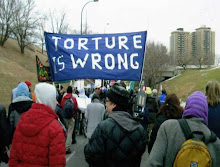
* Ban the use of torture or other cruel, inhuman and degrading treatment.
* Issue an executive order to end the U.S. program of secret detention.
* Close the detention facility at Guantánamo Bay; detainees should be charged and fairly tried, or released.
* Demand a full investigation of all U.S. detention and interrogation policies in the “war on terror.”
Just as surely as the Bush administration’s disastrous human rights policies have reverberated across the globe, so too can a renewed American commitment to fairness and the rule of law. Together, you and I can make this vision a reality.
I know this request comes to you at a time of tremendous economic difficulty here at home. I also know how long we have waited for this moment—an extraordinary opportunity to restore America’s reputation in the world and bring new hope for progress on human rights. From the bottom of my heart, I urge you not to let this historic opportunity pass.
Please make a tax-deductible gift today—and show that our country is ready, once again, to take a leadership role in advancing human rights around the world. For the next 4 days, your contribution will go twice as far, as a group of Amnesty International members has agreed to match all online gifts, up to $250,000. Please be as generous in your year-end giving as your personal circumstances allow.
First time donors making a gift of $60 or more will also receive a beautiful Amnesty International wall calendar, absolutely free.
If we achieve our Matching Gift Challenge goal online, we’ll have immediate access to an additional $250,000—funds that we’ll put to work immediately to ensure a renewed American commitment to justice and human rights.
Thank you in advance for your support.
Sincerely,
Larry Cox Executive Director, Amnesty International USA
I want you to know how much I and my colleagues at Amnesty International appreciate all you have done to defend human rights through a remarkably difficult period.
You can ensure that Amnesty stays at the forefront of the world’s most pressing human rights emergencies in 2009 by making a tax-deductible year-end gift to our America I Believe In Matching Gift Challenge.
To restore the America we believe in, we’re calling on President-Elect Obama to take four concrete and immediate steps:
* Ban the use of torture or other cruel, inhuman and degrading treatment.
* Issue an executive order to end the U.S. program of secret detention.
* Close the detention facility at Guantánamo Bay; detainees should be charged and fairly tried, or released.
* Demand a full investigation of all U.S. detention and interrogation policies in the “war on terror.”
Just as surely as the Bush administration’s disastrous human rights policies have reverberated across the globe, so too can a renewed American commitment to fairness and the rule of law. Together, you and I can make this vision a reality.
I know this request comes to you at a time of tremendous economic difficulty here at home. I also know how long we have waited for this moment—an extraordinary opportunity to restore America’s reputation in the world and bring new hope for progress on human rights. From the bottom of my heart, I urge you not to let this historic opportunity pass.
Please make a tax-deductible gift today—and show that our country is ready, once again, to take a leadership role in advancing human rights around the world. For the next 4 days, your contribution will go twice as far, as a group of Amnesty International members has agreed to match all online gifts, up to $250,000. Please be as generous in your year-end giving as your personal circumstances allow.
First time donors making a gift of $60 or more will also receive a beautiful Amnesty International wall calendar, absolutely free.
If we achieve our Matching Gift Challenge goal online, we’ll have immediate access to an additional $250,000—funds that we’ll put to work immediately to ensure a renewed American commitment to justice and human rights.
Thank you in advance for your support.
Sincerely,
Larry Cox Executive Director, Amnesty International USA
Greeting from Jordan
Dear all,
" May your world be filled with warmth and happiness,,""Merry Christmas"".
Best Regards
Dr.Nassar Al-Qaisi
Member of Jordan Parliament
I - Vote 2008
" May your world be filled with warmth and happiness,,""Merry Christmas"".
Best Regards
Dr.Nassar Al-Qaisi
Member of Jordan Parliament
I - Vote 2008
Wednesday, December 24, 2008
Hope for the Holidays!
December 24, 2008
Dear Tim,
As an actor, I know the power of the screen. As an activist, I also know the power of taking a message off the screen and onto the streets. That's why I love CODEPINK--it not only utilizes the best of the visual media with its vibrant pink presence; the women of CODEPINK are also out in the world, whether speaking truth to power, helping Iraqi refugees, or using citizen diplomacy to build bridges with Iran. I support CODEPINK's audacious, compassionate work to create a more just and peaceful world. Won't you?
Peace & Love,
Jane Fonda
Dear Tim,
As an actor, I know the power of the screen. As an activist, I also know the power of taking a message off the screen and onto the streets. That's why I love CODEPINK--it not only utilizes the best of the visual media with its vibrant pink presence; the women of CODEPINK are also out in the world, whether speaking truth to power, helping Iraqi refugees, or using citizen diplomacy to build bridges with Iran. I support CODEPINK's audacious, compassionate work to create a more just and peaceful world. Won't you?
Peace & Love,
Jane Fonda
Subscribe to:
Posts (Atom)