Sunday, November 30, 2008

RNC Letter in Villager

To The Villager:

³The struggle of man against power is the struggle of memory against
forgetting.² Those are the words of Milan Kundera, a Czech writer who was
exiled from his country while it was behind the iron curtain. In the wake
of the Republican National Convention, St. Paul should listen to him.

We have a lot to remember here in our city, where the sacred mounds of
ancient people share river bluffs with Victorian mansions and the twin
domes of church and state. Families have lived here for generations,
leaving their French, German, and Irish names. It is a storied place.

I remember Chris Coleman¹s heart-tugging recollections when he was
campaigning for mayor. They were about his boyhood in St. Paul, For that
matter, I remember his father, who, in the 1960s and 1970s, was the most
powerful politician in the Minnesota legislature. Chris may feel a
certain sense of entitlement, but I have no reason to doubt that he loves
this place, just as many of us do.

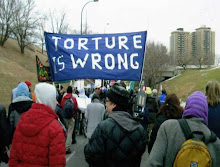
But now a lot of us have other memories, too. We remember long ranks of
black-clad, faceless troopers, tall iron fences shutting in peaceful
protesters, clouds of tear gas, screams of pain and fear, doors being
kicked in, sirens wailing, bridges closed. We remember a week when St.
Paul yielded to becoming a military zone, where a bicycle and a bandana
were enough to get one detained and perhaps beaten. If anyone doubts it,
let them see the film ³Terrorizing Dissent,² put together by journalists
who were on the streets and not ³embedded² in police cars.

And now our mayor and council want us to forget. The streets were cleaned
up immediately. The fences disappeared as if by magic. And Chris writes
to his shell-shocked constituents: ³On a national and international
stage, our city shone in the spotlight, and Saint Paul stands to reap the
rewards for years to come.²

Sure. But I and many others will have a hard time forgetting the
experience of being an occupied city. On my window sill there sits a
memento -- a broken set of plastic handcuffs that I picked up from dozens
scattered across the floor of the RNC Welcoming Committee's convergence
center at 627 S. Smith Ave. The place was relatively quiet when I got
there on the day after the sheriff¹s men had broken in and terrorized 50
people. I noticed on the wall a warning that the occupants had agreed to
keep the space sober and smoke-free. Quite a bunch of rowdies, I
concluded. The real damage from the week was not broken windows or a
couple of vandalized vehicles. It was the destruction of our sense of
freedom and of trust in our own city officers.

No, Chris, we still have questions, and we won¹t easily give up the
struggle of memory against forgetting -- not next week, not next month,
not next year. The wound is deep, and for better or worse it has become a
part of Minnesota¹s history as this 150th year of statehood comes to a
close.


-- Rhoda Gilman

Tuesday, November 25, 2008

Journalists Under Attack, Local Activist Fights Back


When St. Paul police launched a violent crackdown on journalists covering the Republican National Convention in September, Free Press needed an on-the-ground organizer to pressure city officials to drop the charges against the journalists. Free Press knew just the person to call: Nancy Doyle Brown of the Twin Cities Media Alliance.

“The RNC truly were dark days for press freedom,” Doyle Brown said. “I was shocked and outraged. We saw the progressive city of St. Paul become a police state overnight. The RNC was a grave reminder that maintaining our freedoms requires constant vigilance.”

While Free Press gathered signatures through an online letter-writing campaign demanding that the intimidation of journalists be stopped and that all charges be dropped, Doyle Brown busily worked the phones, partnering with Free Press to deliver the letters and plan a major press conference on the steps of St. Paul City Hall.

Time was short. With only two days to organize, Doyle Brown called media reform advocates throughout the city, rallying support for the petition delivery and the press conference. Free Press coordinated with its local members to prepare for the event and ensure a strong media turnout.

On the last night of the RNC, local police stepped up their arrests, sweeping hundreds of people onto a bridge in downtown St. Paul and detaining the entire crowd in a mass arrest.

“We’ll never know how many important stories never got told because their authors were behind bars, not in the streets,” Doyle Brown said.

On Friday, Sept. 5, local citizens, media reformers and journalists — including Democracy Now’s Amy Goodman and others who had been arrested earlier in the week — convened on the steps of City Hall and, led by Doyle Brown, marched inside. They hand-delivered more than 60,000 letters to St. Paul Deputy Mayor Ann Mulholland, St. Paul Attorney John Choi and the office of Ramsey County Attorney Susan Gaertner.

Big conventions like the RNC “are alluring to city leaders,” Doyle Brown said. “But we as residents are ready to say no to these events if they mean turning our streets over to brutal police tactics and repression of freedoms.”

The press conference and petition delivery garnered significant coverage in both independent and mainstream media outlets across the Twin Cities.

They also produced results: Not long after the petition delivery, the county announced it would not pursue any felony charges against journalists. Then, on Sept. 19, authorities in St. Paul announced that they would not prosecute journalists arrested during the RNC.

“Seeing St. Paul drop all charges against journalists is a welcome step,” said Doyle Brown, “but our work is far from done. Watching these arrests brings press freedom into very clear, stark terms. But there are a hundred more subtle ways that press freedom is compromised every day in this country, from allegiance to corporate advertisers to newsroom staff cuts and overreliance on official sources.”

Working with the Twin Cities Media Alliance, whose mission is to bring together media professionals and engaged citizens to improve the quality, accountability and diversity of local media, Doyle Brown intends to keep fighting for a free press.

“I wake up in the morning thinking about how to change the media, so my challenge is to communicate to others the urgency and importance of this issue and ways to make change.”


Sunday, November 23, 2008

Frankenstein in Mesopotamia


By Tom Hayden - November 21, 2008, 6:22PM
The pact being negotiated between the US and Baghdad governments includes a direct rebuff to president-elect Barack Obama's promised policy of withdrawing American combat troops in 16-18 months. The pact instead would leave those troops in place until the end of 2011, a doubling of the time line to which Obama pledged himself. But that's not all.

The most important things, some say, are the things left unsaid. If so, the unmentionable thing would be the police state America is leaving behind in Baghdad.

Finally, human rights observers agree that there are 40-50,000 Iraqis currently held in detention centers under either US or Iraqi control. Under terms of the pact, "we're getting out of the detainee business", says the US military spokesman in Iraq. The US-run camps, known as Bucca and Cropper, hold at least 17,000 detainees under a US-declared "security detention" doctrine that does not exist in either American or Iraqi law. According to Human Rights Watch, they are held "for indefinite periods, without judicial review, and under military processes that do not meet international standards." Most of them - at least 12,000 - were mistakenly seized in American sweeps or played marginal roles the resistance. Those who are released are often killed by Shi'a death squads.

If the US and Iraqi governments were to seek a renewal of the United Nations reauthorization when it expires on December 31, chances are that accepted human rights standards would be demanded for the Iraqis detainees, such as access to legal council, family members and international observers.

But under the proposed Iraq-US pact, the 17,000 will be shifted from US to Iraqi detention facilities, a transition to even greater darkness. Knowing this, the Sunni parliamentary bloc is demanding amnesty for most of them.

The concerns are deadly serious. I interviewed an American contractor, a former Marine, just returned from Baghdad in 2005, one paid to protect the Sunni delegation in the Green Zone. He bitterly spoke of Sunni bodies, bullets lodged in their heads from short range, lye disfiguring their faces, being dumped in the streets, The 2007 Baker-Hamilton Study group issued a one-sentence confirmation that the Iraqi police "routinely engage in sectarian violence, including the unnecessary detention, torture and targeted execution of Sunni Arab civilians."

Before the Baker-Hamilton finding, there were other revelations. The Times revealed secret prisons and torture sites in Baghdad which reported directly to the Interior Ministry, itself under sectarian Shi'a control. The Times also described "black sites" at Camp Nama, where an American task force beat, kicked, blindfolded and forced Iraqi inmates to crouch in 6-by-8 cubicles in a prison called Hotel California, where the official motto was "No Blood, No Foul."

A Congressionally-created law enforcement commission concluded in September 2007 that the Ministry of Interior is "a ministry in name only...widely regarded as dysfunctional and sectarian."

Even the Bush administration in 2007 confessed "evidence of sectarian bias in the appointment of senior military and police commanders [and] target lists that bypassed operational commanders and directed lower-level intelligence officers to make arrests, primarily of Sunnis."

Dry language, dry bon
es

Antiseptic language is sometimes necessary in journalism and law to make objective evaluations. But it also can suppress moral and emotional responses to suffering and serve as a sedative in managing public opinion. Riveting stories of torture dungeons don't rate much in the media in comparison to domestic violence between white Americans. For instance, clear evidence that Sunni children were being murdered by the Sunni captors, persuasive to a top US military investigator, made it into the Salt Lake Tribune, but not much further. The US Judge Advocate happened to be from Utah, making it a local story.

Counterinsurgency often is framed as winning hearts and minds, not as crushing the alleged insurgents to protect the civilian population. In South Vietnam, that led to "strategic hamlets" and the Phoenix program. In Central America, it was death squads who killed priests, nuns and thousands of civilians. In both cases, American and world opinion was shocked.

In the case of Iraq, there is silence in the West.

For example, there has not been a single Congressional inquiry into the oblique revelations in Bob Woodward's latest book about secret operations launched in May 2006 to "locate, target, and kill individuals in extremist groups". The top intelligence adviser on these operations, Derek Harvey, told Woodward that the killings gave him orgasms. These were extra-judicial killings, with the Pentagon acting as judge, jury and executioner. The definition of "extremist" was stretched to include anyone named by an informant as a supporter of the Sunni insurgency, supported by an overwhelming majority of Sunnis.

During Vietnam, the Phoenix program, exposed as killing over 20,000 Vietcong suspects, was closed down after an outburst of ethical fury. In 2004, the Phoenix program's revival was recommended by Dr. David Kilkullen, described in the Washington Post as "chief adviser on counterinsurgency operations" to Gen. David Petraeus. Kilkullen advocated a "global Phoenix program" to combat global terror in a 2004 article in Small Wars Journal. He later reissued the article without the Phoenix label, having already described the Phoenix project as "unfairly maligned" and "highly effective." He also advocates applying "armed social science" against the "physical and mental vulnerabilities" of Iraqi detainees. He walks the streets of Washington today, widely accepted in the world of national security advisers. No one in that select establishment has ever criticised his writings.

Americans already pay for this sectarian repression - which even includes the diminishment of Christian seats in parliament - with $22 billion in tax dollars from 2003 through 2007 for American advisers to the Interior Ministry, police and prison guards. In 2007, there were 90 American advisers assigned to the interior ministry, which much of training of police and prison personnel is outsourced to contractors like DynCorps, according to Congressional oversight hearings.

One of the trainers has been Gen. James Steele, a veteran of the Central American counterinsurgency wars, who was with the US Civil Police Assistance Training Team when the sectarian Iraqi militias began operating under official cover. He was quoted in 2006 as "not regretting their creation."

How has this happened? Presumably the public lacks any sympathy for individuals accused of Islamic terrorism. But there has been ample uproar over torture at Abu Graeb and US foreign policy generally. The public simply doesn't know much at all about the detention camps in Iraq. Most of the concerned NGOs take up less controversial causes than Iraqi inmates for their fundraising. Human rights insiders accept the paradigm that a democratic, pluralistic Iraq is a work in progress, still lacking an independent judiciary and ACLU watchdogs of their own. The international Red Cross has agrees to keep its findings secret. The peace movement is locked into an exclusive "out now" framework that subordinates police and prison issues to the margins. The Pentagon therefore succeeds in fabricating a new mirage in the desert to replace the discredited one. As our combat troops are replaced by low-visibility advisers, amnesia could take over completely, while shame and hatred beget a new generation of insurgents.

The US administration could do something about this Frankenstein. It could use its remaining leverage to insist on the release of the detainees or the application of enforceable human rights standards and access for the media and human rights workers.

But Congress and the media seem to think that a sectarian police state is the ugly price that must be paid for sharply reducing American casualties and reducing our footprint in Iraq. The hot debate among judge advocates, pro bono lawyers and Congressional investigators, is about a few hundred Guantanamo detainees, not the dark underside of counterinsurgency.

The next stop is Afghanistan, where another 50,000 detainees fester under similar conditions to Iraq, and the British envoy recently recommended an "acceptable dictator." Instead of addressing the human rights crisis in that country, the envoy suggest that "we should think of preparing our public opinion" for dictatorship as the necessary outcome.#
Tom Hayden can be reached at tomhayden.com. His recent books are Ending the War in Iraq [2007] and The Tom Hayden Reader [2008]
.

“The Movement to Elect Barack Obama”


Prospects, Possibilities, Proposals
Marshall Ganz
(11/20/08)


“I will ask for your service and your active citizenship when I am President of the United States. This will not be a call issued in one speech or one program—this will be a central cause of my presidency.”

Barack Obama, Colorado Springs, July 2, 2008.


“Delaware County, Pennsylvania, volunteers have a fierce case of, ‘Well, we're all fired up now, and twiddling our thumbs!’ I suspect it can't only be happening here, but all over the country. Here, ALL the leader volunteers are getting bombarded by calls from volunteers essentially asking, ‘Nowwhatnowwhatnowwhat?’

Marilee Taussig, Delaware County, Pennsylvania, November 17, 2008.


The campaign to elect Barack Obama as President launched a movement. Across the country, some 3.5 million citizens contributed to this historic effort. Rooted in the motto of “respect, empower, include,” the campaign recruited, trained and deployed some 3000 community organizers who structured, trained, and coached thousands of local leadership teams. Those teams, in turn, worked together to mobilize individuals in each community to take part in the campaign in record numbers. They became the foundation of a renewed civic infrastructure urgently needed to deal with the critical challenges of our time.

Now, the question is, can it flourish? Or, as one Wisconsin team leader put it, the question is whether “the Obama administration understands the true power of the network they have created.”

It is time to consider the shape such a movement could take, how government could encourage it, and how the interaction of government and movement could strengthen our democracy. Such clarity is needed if we are to address our most critical public challenges: from climate change, to economic renewal, to education and health care.

Historically, social movements were launched outside the electoral process, rooted in communities, workplaces, or churches. They only later reshaped party politics and public policy. The civil rights movement, for example, began to organize in the South in the 1950s, reshaped both parties in the 1960s, and, as a result won major policy reform.

The Obama campaign became a social movement within a political campaign. It went beyond generating lists of donors and potential donors. It trained full-time organizers who were mostly in their 20s; organized thousands of local leadership teams (1,100 in Ohio alone); and engaged at least 1.5 million volunteers. Because this campaign built its own organization at the local level - rather than relying on the usual pastiche of interest groups, party organizations, and 527s – it can be a major new force in responding to today’s most pressing challenges and help usher in reform unmatched since the 1930s.

But as President-elect Obama and his advisors tackle the urgent task of re-peopling the Federal government, some important questions must be addressed.

Can a sitting President govern the country and lead a movement at the same time? Not only is Obama required to provide leadership to the entire country, he must bring the best leadership he can into government. That means President Obama may provide the movement with moral and political leadership but not its organizational leadership. Who can? And how would it work?

Trying to “turn it over” to the Democratic Party will not work. One can turn over lists, but not people, much less a movement.

Some people, especially political operatives, seem focused on transforming the Obama movement into a Web-based network: funds could be raised, information shared, emails called for, etc. As a kind of Presidential “MoveOn,” such a network could mobilize support when needed, albeit thinly. But this would omit the “community organizing” that infused the campaign with the grassroots leadership that gave it its strength.

More promising – and challenging – would be an effort to turn Obama for America into a new organization, perhaps a 527 or 501(c)(4). Such a “Campaign for a New America” would create a representative governing body and invite organizers, leaders, and volunteers to work through it as a major venue for “active citizenship” at all government levels. One strength of the Obama campaign was a focus on shared values that freed volunteers from rigid “issue silos” of progressive politics and facilitating participation within a far more diverse constituency. In the tradition of American social movements, it linked local action to national purpose, investing local effort with national impact, and anchoring national goals in local reality. This new organization could link the pursuit of national, state and local policy goals, facilitate local community action, and offer the training, coordination, and communication which the campaign did so well. And it could serve as a wellspring of support for candidates for local, state and national public office.

The work of volunteers in the Obama campaign demonstrated an appetite for active citizenship that many thought dead, especially in young people. The excitement, however, is not about the social service voluntarism extolled by the first President Bush as “a thousand points of light.” The excitement is about empowerment, working with others to organize, advocate, and practice politics.

This is what “active citizenship” means. It involves delegating responsibility and inviting citizens to join in the work of strategizing, mobilizing, and enacting public policy at state and local levels.

This approach to governance is not unfamiliar. During the Civil War, for example, the Federal Government created the U.S. Sanitary Commission as a structure through which women organized themselves – and their communities – to address medical needs of soldiers and, later, veterans. It evolved into the Red Cross. During World Wars and Depression government created similar structures through which citizens could actively engage in the collaborative work needed to address these challenges. In these cases, citizens were called upon to organize not because it was a “nice thing”, but because without citizen engagement these crises could not be addressed.

The crises we now face can also be addressed with the depth, breadth and ambition with which we faced these earlier crises. Dealing with these challenges will require citizen engagement in every neighborhood, town, city, county and state. It will call for an unprecedented degree of commitment by individuals, families, communities, and all manner of public and private institutions. In other words, dealing the challenges we now face may offer the opportunity to reengage ourselves in the work of self-government.

For this to work, however, and for the full range of our citizenry to participate, government will not only have to create the structure, but provide training, tools, and leadership. In the past, such opportunities for civic leadership development have either been taken advantage of mainly by the privileged – drawing on experience, practices, and resources already available to them – or they have been narrowly focused on the needs of “underserved populations.” For many years, however, while many institutions focused on social service provision, our civic leadership skills have atrophied. The Obama campaign demonstrated that the need, appetite, and value of civic leadership training – or organizing – cuts across class, race, and region.

The major investment by the Obama campaign in the development of civic capital – infrastructure of leadership, teams, and organizers – has already changed us, creating new capacity, opportunity, and possibility. Citizen efforts to support the Obama program have already begun to spring up around the country. And, of course, its organizers have become the object of major recruiting efforts by community organizations, the labor movement, the climate change people, and citizen groups of every ilk. The major “recruiting effort,” however, could – and ought to be – in service to the nation itself.

Marshall Ganz, a veteran community organizer, is now a Lecturer in Public Policy at the Kennedy School of Government where he teaches courses in organizing, public narrative and moral leadership. He advised the Obama campaign on organizing strategy, leadership development, and training.


Thursday, November 20, 2008

Shouting and pounding, Iraqis fight over US pact


BAGHDAD – Opposition lawmakers shouted and pounded their desks in protest Thursday in a second day of emotional debate in parliament over a proposed agreement with the U.S. that would allow American forces to stay in Iraq for three more years.

At least three parliamentary factions, including lawmakers loyal to Shiite leader Muqtada al-Sadr, are fighting the agreement. But their opposition is not expected to prevent it from passing.

"The agreement ushers in a new occupation of Iraq, the duration of which we cannot tell," said Ajeel Abdul-Hussein, the senior Sadrist lawmaker.

If approved, the security pact would for the first time establish a clear timetable for the withdrawal of American forces from Iraq, and it would give Iraqi authorities far more oversight over the U.S. military presence than they currently have. It took nine months to negotiate the deal.

Prime Minister Nouri al-Maliki went on national television Tuesday to tell Iraqis the agreement is a step toward full sovereignty and to reassure neighboring Syria and Iran that he will not allow Iraq to be a base for attacks against them.

Sadrist lawmakers disrupted a reading of the proposed agreement for the second straight day. On Wednesday, they scuffled with security guards after one of them aggressively approached the bench while a lawmaker from the ruling Shiite coalition was reading the text.

On Thursday, they attempted to drown out the lawmaker reading it. Shouting matches broke out and Speaker Mahmoud al-Mashhadani was barely able to control the chaos that lasted about 20 minutes.

Parliament managed to complete the second reading, the last step prior to opening debate on the pact ahead of a vote scheduled for Monday. However, the disruptions on Wednesday could delay the vote by a day or two.

Ali al-Adeeb, a Shiite lawmaker close to al-Maliki, said it was necessary for American forces to remain in Iraq because of the insurgency even if the government, like opposition lawmakers, saw the U.S. presence as "unwanted."

Al-Maliki warned the alternative to the security pact — a renewal or an extension of the U.N. mandate providing legal cover for U.S. forces in Iraq — is worse.

"The danger of an extension is the removal of Iraq's sovereignty and facing the same problem again, which will drive us back to searching for another agreement" with the Americans, al-Maliki told a news conference.

He assured Iraqis the timeline for the withdrawal of U.S. forces under the agreement — out of cities by June 30, 2009, and the entire country by the end of 2011 — is not negotiable and could even be moved up.

The Cabinet approved the agreement last weekend, meaning the pact stands a good chance of passage in 275-seat parliament where the government's parties dominate.

But the vocal opposition in parliament could mean a narrow victory for the government in the vote, which would cast a shadow on the legitimacy of the deal that al-Maliki has said should be approved with a broad consensus.

Iraq's most influential Shiite cleric, Grand Ayatollah Ali al-Sistani, said the deal would be acceptable only if approved by a wide margin in parliament. Al-Sistani enjoys enormous influence among Iraq's Shiite majority. He could bury the deal if he speaks publicly against it.

How the deal fares in parliament will also have implications for the fortunes of Iraq's major parties in provincial elections on Jan. 31 and a general election late in 2009.

The Sadrists hope their anti-American stance will win them votes of Iraqis who see the Americans as occupiers who plan to stay indefinitely.

But al-Maliki's Dawa party and the Supreme Islamic Iraqi Council, its senior government partner, hope passage by a wide margin could win them votes as the parties that engineered a timetable for the Americans' departure.

If the agreement passes the legislature, it will go to the president and his two deputies for ratification. Each one has veto power.

Shiite coalition parties, which have 85 seats, and the Kurdish bloc, with 54, firmly support the pact, and their votes alone amount to a thin majority. They might also pick up support from smaller parties.

The position of their Sunni Arab allies, the three-party Iraqi Accordance Front, is less certain and many of those 44 lawmakers might not back the deal.

Beside the Sadrists, who have about 30 lawmakers, the small Shiite Fadhila party, which has 15 seats, and a small Sunni Arab bloc with 11 seats are firmly opposed to the deal.

Also Thursday, the U.S. military said a leader of al-Qaida in Iraq, blamed in the 2004 abduction and murder of Army reservist Staff Sgt. Matt Maupin of Batavia, Ohio, had been killed.

The military said Hajji Hammadi also was the mastermind of a June 26 attack that killed three U.S. Marines, two interpreters and more than 20 Iraqis in western Anbar province.

It said U.S. forces killed Hammadi and another armed insurgent on Nov. 11 in Baghdad.

Iraq boots out the Americans

It’s official (nearly): Iraq’s government wants America’s army out by the end of 2011
Nov 20th 2008 | BAGHDAD HEN General David Petraeus, now America’s most celebrated military commander, arrived in Iraq in 2003 at the head of an airborne division, he asked a journalist: “Tell me how this ends?” For years nobody had a good answer. But now, thanks to a military pact between America and Iraq, a conclusion is in sight: America’s war in Iraq will end in three years’ time, with American troops being shown the door and Iraqi politicians competing to claim credit for getting rid of the foreigners.

A “withdrawal agreement” approved by the Iraqi cabinet on November 16th requires American troops to pull out of Iraqi towns and cities by the end of June next year, and to leave Iraq altogether by December 31st 2011. Those deadlines, said Iraq’s prime minister, Nuri al-Maliki, in a televised address, would not be extended. The deal was not perfect, but marked “a solid start for Iraq to regain its full sovereignty in three years.”

There were no secret articles, he said, and there would be no permanent American bases. Iraq could not be used to attack others (ie, Syria or Iran). There would be, he promised, “no detainees any more, no detention centres any more, no searches or raids of buildings or houses, until there is an Iraqi judicial warrant and it is fully co-ordinated with the Iraqi government.”

This is a big moment for America and Iraq, yet the Iraqi government was more regretful than jubilant, calling the deal the best it could achieve after more than a year of negotiations. The Bush administration, now in its last weeks in power, made several concessions. It had long opposed any notion of a fixed timetable for withdrawal, saying any troop pull-out had to be based on security conditions on the ground. The White House said the new deadlines were “aspirational”, but the text leaves less wiggle-room; clauses allowing for a review of the deadline, and the possibility that some American troops would stay on to train and support Iraqi forces, have been deleted. Security has improved markedly. But the political context has also shifted against the Bush administration—and the Iraqis have got their timetable.

In America, Ike Skelton, chairman of the House armed services committee, a Democrat, said he was worried by provisions that could result in American troops facing prosecution in Iraqi courts. But the text suggests that this is a remote possibility. Iraq has legal jurisdiction over American troops only in cases of “major and intentional crimes”, and even then only when they are outside their bases and off-duty.

The agreement should make life easier for Barack Obama, although there is some dispute as to whether it will have to be ratified by the American Congress. The deal supports the president-elect’s principle of a firm timetable for leaving Iraq, but allows him to draw out the process beyond the 16-month withdrawal he promised in his campaign. Admiral Mike Mullen, chairman of the joint chiefs of staff, said America had so much equipment that it would take two or three years to withdraw completely—security conditions permitting.

The agreement was strongly endorsed by the Iraqi cabinet but its passage through the Iraqi parliament, which could vote on it as early as November 24th, is less assured. There were brawls among the lawmakers when it was discussed on November 19th.

In a country with a history of intense opposition to military pacts with an invading power, the deal could polarise opinion. Followers of Muqtada al-Sadr, the radical Shia cleric who heads a powerful (though now dormant) private army, oppose the treaty and demand an immediate withdrawal of foreign troops. Ayatollah Ali al-Sistani, Iraq’s most senior Shia cleric, says any agreement had to restore Iraqi sovereignty and win “national consensus”. But he did not oppose it, which supporters take as tacit assent.

Some Sunnis want the agreement to be put to a referendum. Another contentious issue is the status of some 17,000 (mostly Sunni) prisoners in American hands. The Iraqi government is due to take responsibility for them, but some Sunni leaders want them all released.

Iran is equivocal. The speaker of its parliament, Ali Larijani, said America was seeking to turn Iraq into a vassal. But the leader of Iran’s judiciary, Ayatollah Mahmud Hashemi Shahrudi, said the Iraqi government “has done very well”. Some interpret this as Iranian endorsement. But like so much else in Iran, it is hard to pick out a genuine signal from the political noise.


From The Economist print edition


Tuesday, November 11, 2008

Was Georgia a Neo-Con Conspiracy? A Lesson for Obama

By Tom Hayden - November 10, 2008, 12:33PM
New revelations about Georgia's August war with Russia should send a warning to president-elect Barack Obama about how a commander-in-chief can be manipulated into war.

It now appears that the same neo-conservatives who manipulated the US into the Iraq war on false evidence were directly involved in backing Georgia's ill-fated operation on August 7-8, which eyewitness military observers have described as indiscriminate attacks by Georgia on Russian and civilian positions. The observers reports, first made in August and then October to the Organization for Security and Cooperation in Europe, were disclosed in the New York Times three days after the presidential election. [
NYT, Nov. 7]

The new evidence increases the likelihood that the August 7-8 clash between Georgia and Russia was an "October Surprise" that would highlight John McCain's greater foreign policy experience at the height of the presidential election.

The Georgia fighting occurred immediately before the Democratic convention in Denver. McCain, the leading public advocate for Georgia, immediately declared "we are all Georgians now" and promised "to blast Russia." Obama, on vacation in Hawaii, at first called for greater diplomacy, but quickly fell in line with a bipartisan consensus of national security advisers and the mainstream media. Obama's national security adviser, Susan Rice, openly applauded the White House for its rapid response, including support for NATO's inclusion of Georgia and the Ukraine and a one billion dollar emergency appropriation.

The newly-released evidence for the "October Surprise" now deserves deeper reflection by Obama and his advisers, and greater investigation by the mainstream media.

The trail of evidence stats with Randy Scheunemann, McCain's top foreign policy adviser and former director of the Committee for the Liberation of Iraq, which secured some $90 million in federal funds to lobby for the fabricated agenda of Iraqi exiles like Ahmed Chalabi leading to the Iraq invasion.

Scheunemann became a registered foreign agent for Mikheil Saakashvili's Georgian government when it came to power in 2004, making $800,000 in fees for his lobbying firm, Orion Strategies, until the relationship on May 15 was formally terminated under McCain's 2008 campaign rules.

In those years, McCain traveled to Georgia more than once, nominated his "close friend" Saakashvili for a Nobel Prize in 2005, engineered support for Georgia through the Republican Democracy Institute, and supported the US training of combat forces there. With Schuenemann as his adviser, Saakashvili had campaigned on a platform of taking back South Ossetia and Abkhazia. Schuenemann was also his lobbyist when Saakashvili sent troops to retake two other separatist enclaves, Ajaria in 2004, and upper Kodori Gorge in Abkhazia in 2006, both over Russian objections. Schuenemann and McCain visited Georgia again in 2006.

Scheunemann invented the neo-conservative battle cry of "rolling back rogue states", used by McCain in a 1999 speech, an echo of the Cold War strategy of rolling back the Soviet Union, and was a paid lobbyist for Latvia, Macedonia, Romania, and the so-called Caspian Alliance, a consortium including British Petroleum, Chevron and Conoco building a pipeline through Georgia to bypass the former Soviet Union.

Scheunemann attacked Secretary of State Condoleezza Rice in 2006 for "appeasement" of Russia over Georgia, suggesting the same tensions between the neo-conservatives, McCain, and Cheney's office versus the State Department that undermined rational assessments in the runup to Iraq.
[Financial Times, Oct. 21, 2006]

Now that Georgia's August 7 operation appears to have been pre-planned and deliberate, is it possible to believe that Scheunemann was unaware of a scenario that closely matched the August 1964 Gulf of Tonkin incident? Before this becomes yesterday's news, someone should ask what did he know and when did he know it? Did the US advisers to the Georgian military know and not report the facts? In the unlikely event that they were uninformed and uninvolved, the McCain team was quick to exploit the moment to attack Obama for inexperienced wobbling.

There followed a complete acquiescence by the Democrats, led by Obama's national security advisers, whose Cold War conditioning apparently trumped their own experience of being manipulated into the Iraq war. Or was a political decision made that Obama could not afford to appear weaker than McCain on Russia? A reignited Cold War would have been fused with the War on Terrorism in one dominant paradigm.

Now that they are in opposition, there is little doubt that the neo-conservatives will continue their strategy of confrontation on the Russian border. These are people who deliberately exaggerated the Soviet military threat in the Reagan years, developed the Project for the New American Century [where Scheunemann was a director], fabricated evidence about Saddam's arsenal, and seemingly have never stopped. They could destroy an Obama presidency by demanding expenditures for multiple wars which America cannot win and cannot afford, or alternatively accusing him of weakening America in the world.

The important cautionary lesson for Obama is that his initial instincts favoring diplomacy were correct while his national security advisers failed him. There is a parallel with the early days of the John Kennedy presidency, when the national security establishment presented a plan for invading Cuba to a young president eager to prove his national security mettle. If Kennedy rejected the Bay of Pigs invasion, he would have been accused of weakness and treason. When the invasion turned into a debacle - the Cubans had detailed information about the training and landing sites - Kennedy was quoted later as wishing he could tear the CIA into a thousand pieces. Indeed, if the national security advisers had prevailed against the secret diplomacy of the Kennedy brothers, there might have been nuclear war over Cuba. John Kennedy's deep questioning of the Cold War began with those disastrous experiences.

Vice president Joe Biden famously warned that Barack Obama would be tested over national security policy in the first months of his tenure. That the testing may come from within the national security establishment, not only from foreign sources, should give Obama pause as he contemplates the time ahead.